

The Anatomy of a Bow Tie Explained
A bow tie may be one of the smallest elements of formalwear, but it carries outsized impact. Worn with everything from black tie to creative tailoring, the bow tie has evolved from a practical neckwear solution into a symbol of personality and refinement.
But how, you may ask, is it actually made?
In this guide, we break down the anatomy of a bow tie, exploring the materials, structure, shapes, and craftsmanship that transforms a piece of fabric into such an iconic piece of fashion.
Fabric: The Foundation
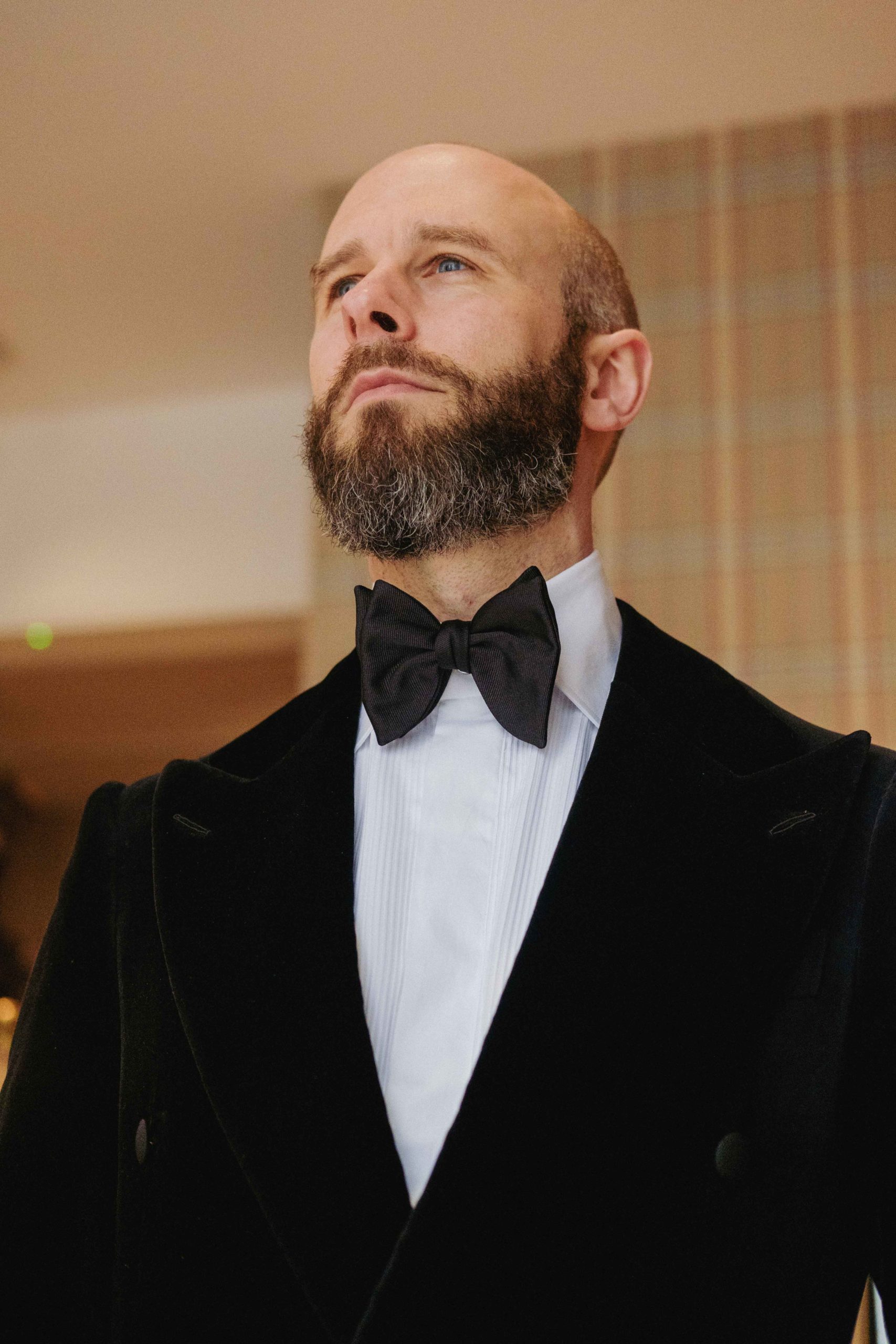
The process begins with fabric selection. The choice of material determines how the bow will drape, fold, and hold its shape.
Common bow tie fabrics include:
Silk – The classic choice for formalwear. Silk offers sheen, smoothness, and excellent tying memory.
Velvet – Rich texture and depth, ideal for evening wear and black tie events.
Cotton – Breathable and versatile, perfect for daytime or relaxed formal looks.
Linen – Textured and lightweight, ideal for summer occasions.
Wool – Structured and matte, often used for autumn and winter styling.
The fabric weight and weave influence how easily, and affectively the bow can be tied, as well as (most importantly) how full the finished shape appears.
Bow Ties For Black Tie
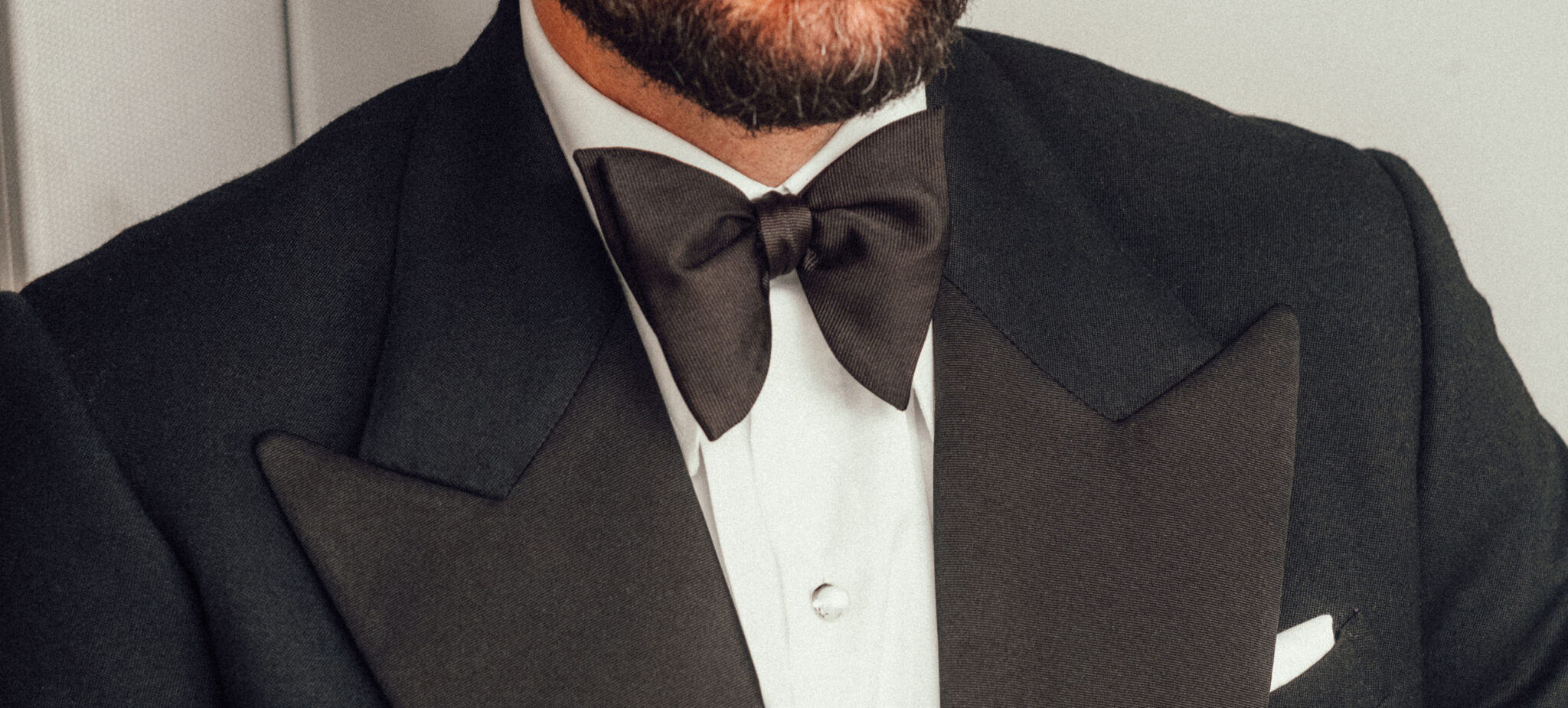
Silk is used exclusively for black tie. Choosing your preference for which one comes down to which facing you choose on your dinner jacket. You can read more about the dinner jacket, lapel shapes and styles here.
- Silk Satin
- Silk Grosgrain
- Silk Moire
Pattern Cutting and Shape
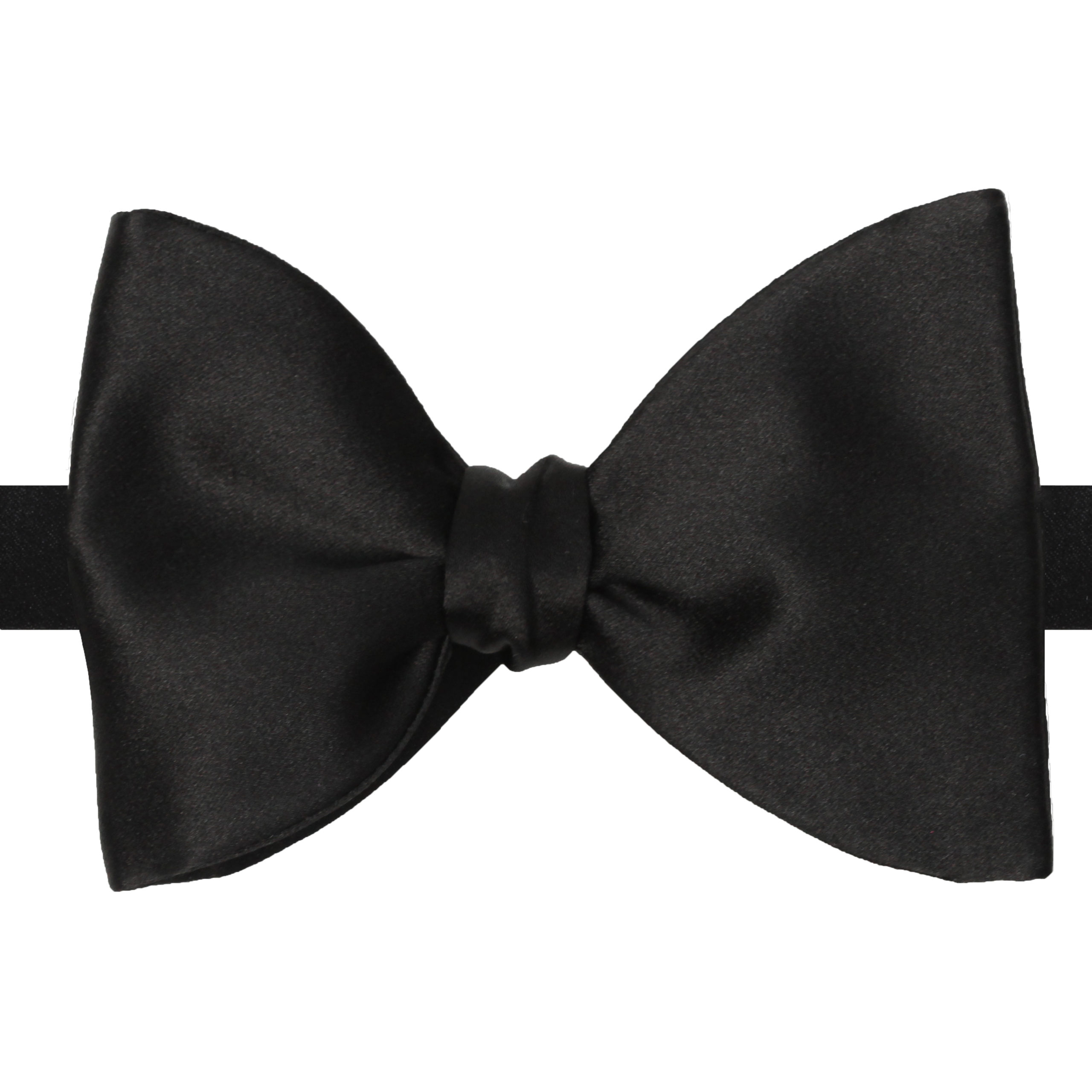
Once the fabric is selected, the bow tie is cut according to its shape. The three most common styles are:
Butterfly (Thistle) – A wider, classic silhouette often seen in black tie dress codes
Batwing (Straight) – A slimmer, modern shape with subtle lines
Diamond – A pointed tip that adds distinctive flair
At la Bowtique, we’ve seen a rise in requests for different shapes, which we have done extensive research in, and created a range of “dropped” bow ties that essentially take the butterfly shape and exagerated the bottom.
Precision cutting ensures symmetry and proportion. Even a few millimetres can affect how the bow sits when tied..
Interlining: The Hidden Structure of The Bow Tie
Inside most quality bow ties is an interlining — a layer of material sandwiched between the outer fabric layers.
Interlining provides:
• Structure
• Stability
• Shape retention
The thickness of the interlining must be carefully balanced. Too thick and the bow becomes bulky. Too thin and it loses definition.
High-quality bow ties use interlining that complements the outer fabric rather than overpowering it.
Stitching and Construction
The fabric pieces are sewn together, usually right sides facing inward, then turned and pressed. Clean seams and sharp edges are critical.
Key details include:
• Reinforced neckband stitching
• Smooth adjustable hardware
• Even edge finishing
Hand-finished bow ties often feature subtle imperfections that indicate craftsmanship rather than mass production.
Adjustable Neckband
Modern bow ties include an adjustable strap to accommodate different collar sizes. Quality hardware should feel secure but unobtrusive.
A properly fitted bow tie should sit snugly against the collar without pulling or sagging.
Self-Tie vs Pre-Tied Bow Tie
A self-tie bow tie allows the wearer to create a slightly asymmetrical knot – widely considered the hallmark of authentic formal style.
Pre-tied bow ties offer convenience but lack the organic character of a hand-tied bow.
Many formal dress codes, particularly black tie, traditionally favour the self-tie bow.
Conclusion
The anatomy of a bow tie reveals something fascinating: elegance is engineered.
From fabric choice and internal structure to shape and stitching, each component contributes to the final silhouette. What appears effortless is, in reality, the result of careful design and skilled craftsmanship.
The next time you tie a bow, remember, you’re not just fastening fabric, you’re wearing a piece of art and fashion history.
If you need more guidance on the finer details of Black Tie and everything that surrounds it, our book Modern Black Tie is a must-read! You can get yourself a copy here.